
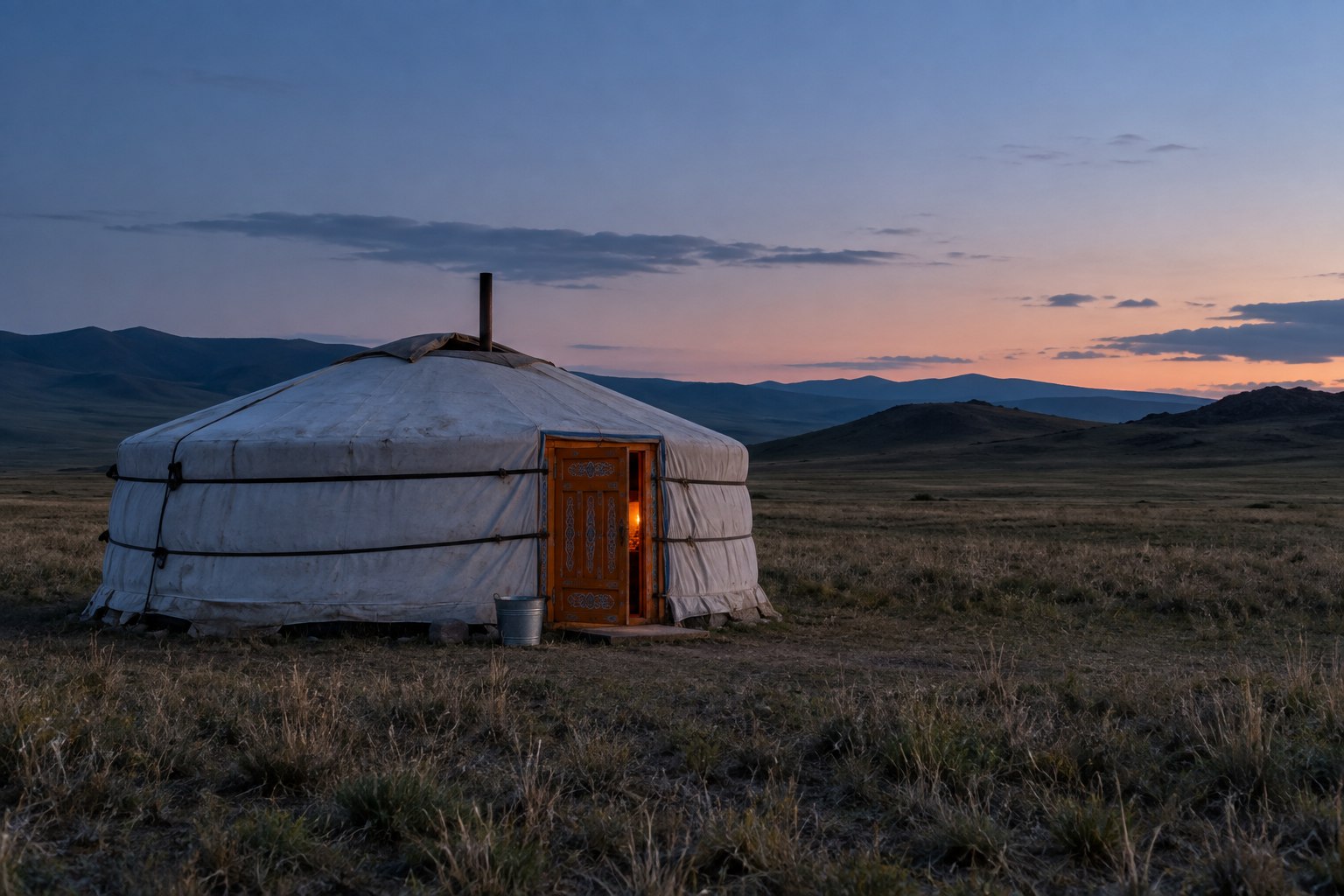
Evening settles over the steppe. Horses are still grazing near the camp, an orange door opens and you are invited to sit beside the stove. A Mongolia yurt stay introduces you to a home, and to a different way of travelling: taking time to arrive, share a bowl of tea and notice the everyday life around you.
A little preparation makes the experience more rewarding. Will you stay with a household or at a tourist camp? What facilities should you expect? How can you join in without getting in the way? This guide explores staying with nomadic families in Mongolia, from the sleeping arrangements to the small gestures that help a visit feel comfortable for everyone.
The Mongolian ger: a home that moves with the seasons
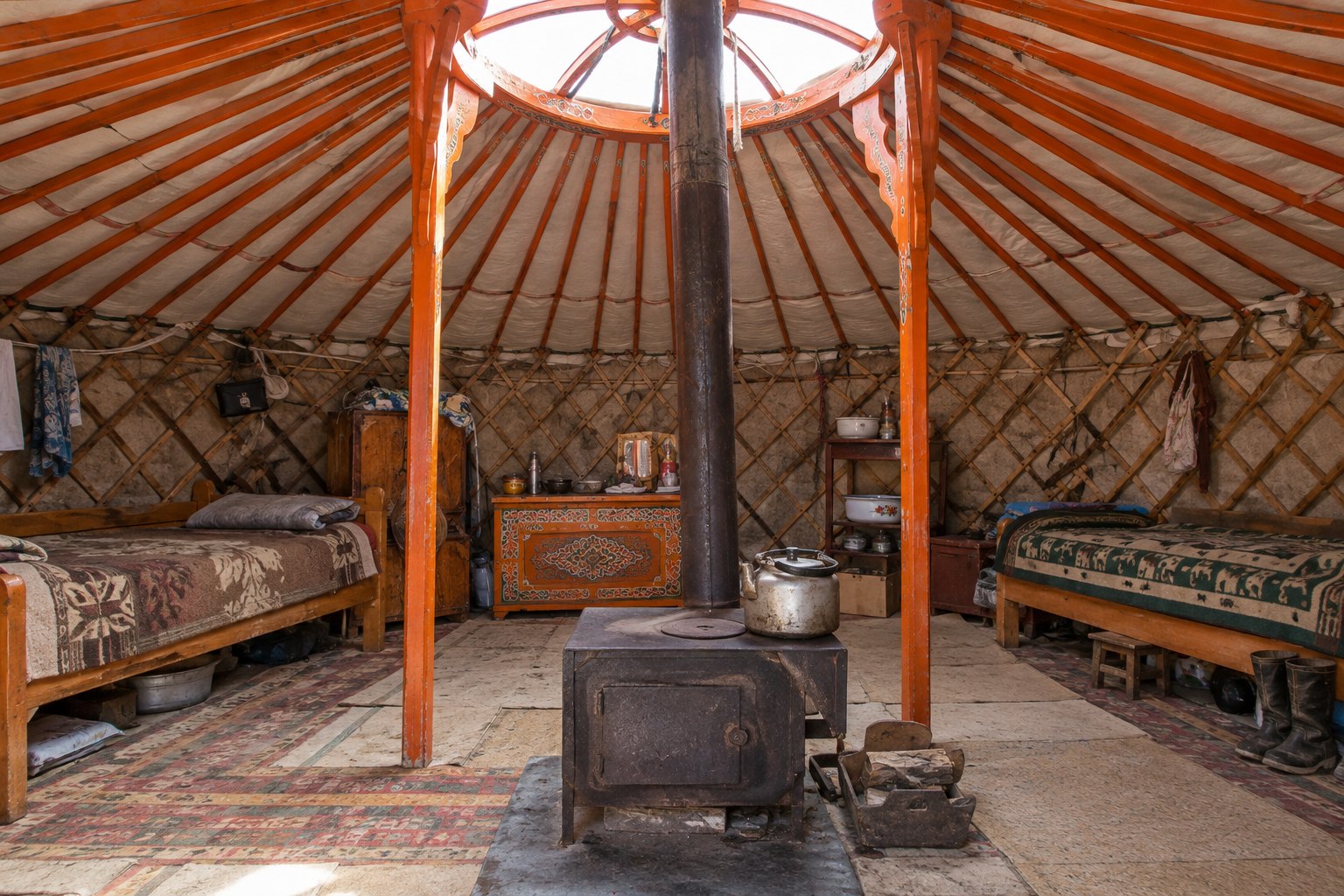
In Mongolia, a yurt is called a ger. Its circular structure combines a wooden frame, felt insulation and a canvas cover. It can be taken apart and rebuilt to accompany herders as they move. Inside, beds and furniture follow the curved walls, with a stove at the centre of the living space.
The dwelling also carries skills passed down within families. UNESCO inscribed the traditional craftsmanship of the Mongol ger and its associated customs on its list of intangible cultural heritage in 2013. Looking closely at the painted woodwork, ropes and layers of felt reveals the knowledge behind a seemingly simple building.
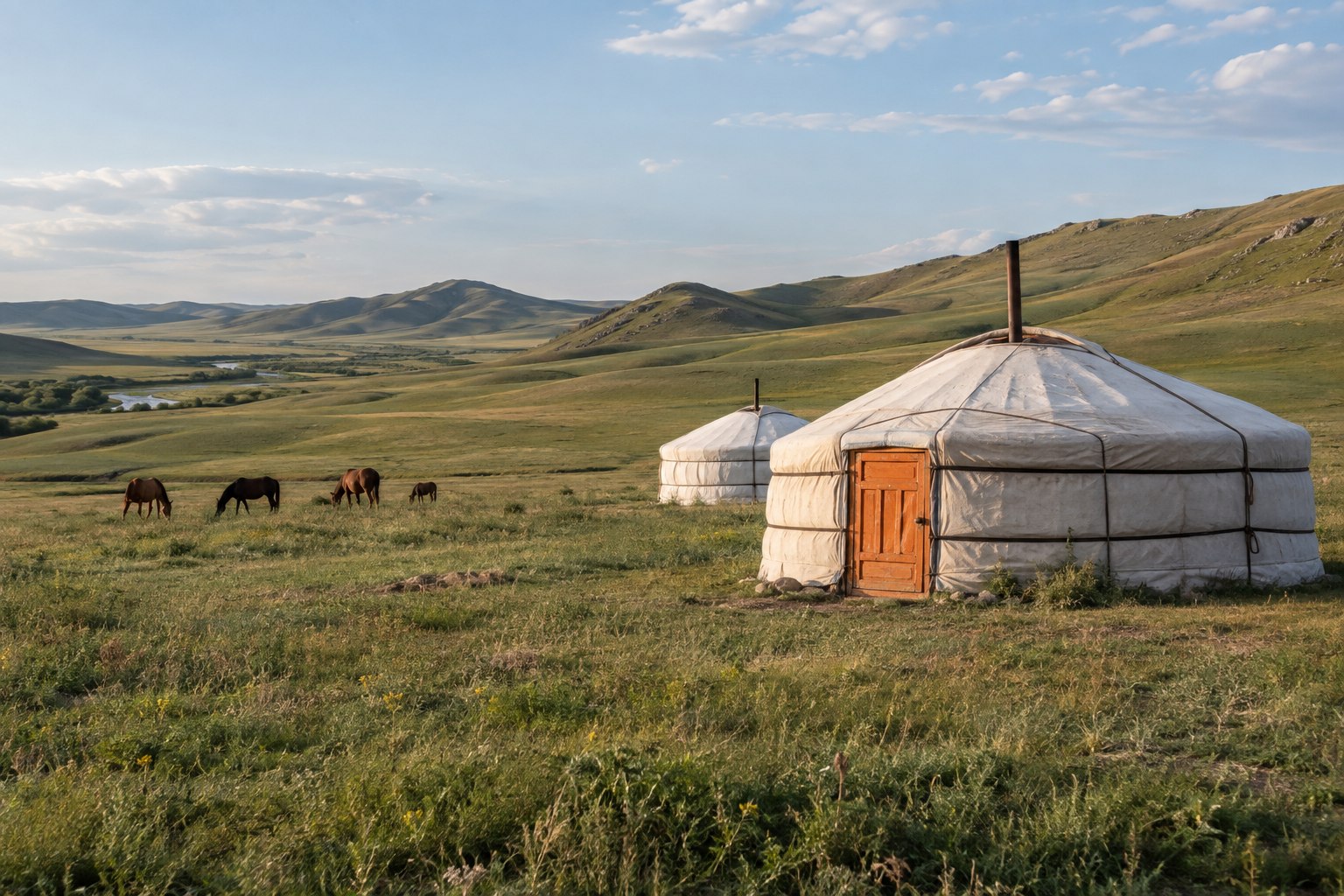
Nomadic family stay or tourist ger camp: which should you choose?
The phrase “night in a yurt” can describe several different experiences. Before booking, ask who will host you, where you will sleep and which services are included. Two gers that look similar from outside may offer quite different stays.
Staying with a nomadic family
You stay close to a herding household’s daily life. Sleeping arrangements may involve a guest ger or a shared space, with simple washing and toilet facilities. The main appeal is the encounter with your hosts, with the practical arrangements agreed in advance.
Staying at a tourist ger camp
These camps provide gers prepared for travellers. Meals are usually organised, and bathrooms may be in a shared building. Some camps offer more comfort. Check whether showers are available, when hot water is supplied and how you can charge your devices.
What does a day with a nomadic family look like?
In the morning, the first movements of the herd set the pace. Depending on the season and the animals they keep, your hosts may be milking, gathering livestock or preparing dairy products. A guide helps translate conversations and explain what you see, from the choice of grazing land to the layout of the household’s camp.
If your hosts invite you, you might help with a small task, watch a meal being prepared or head out for a short walk. These moments should never be treated as a guaranteed activity programme. Work, weather and the needs of the animals shape the day. There is plenty to discover in ordinary routines, without asking the family to turn its life into a performance.
An afternoon can also leave time to read, talk or explore nearby with your guide. Horse riding requires separate arrangements and support suited to your experience. Our guide to horse riding in Mongolia explains how to prepare if you would like to add riding to your stay.
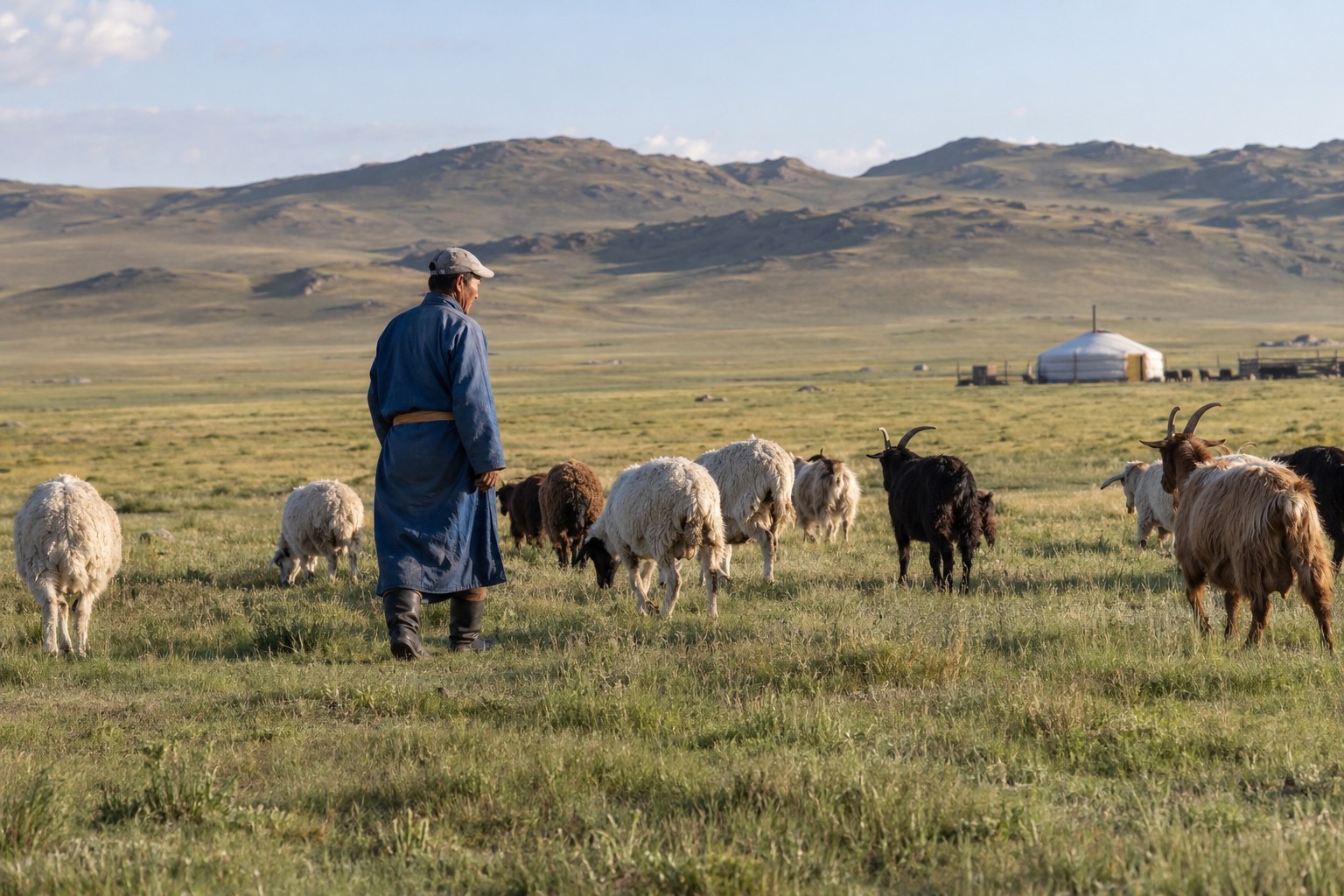
A day without moving camp can leave more lasting memories than a long list of stops.
Entering a ger: small gestures that help you feel welcome
Your guide and hosts are your best points of reference. A few customs for visiting a ger are helpful starting points: step over the threshold, avoid leaning against the central support posts and wait to be shown where to sit. Do not put rubbish into the stove.
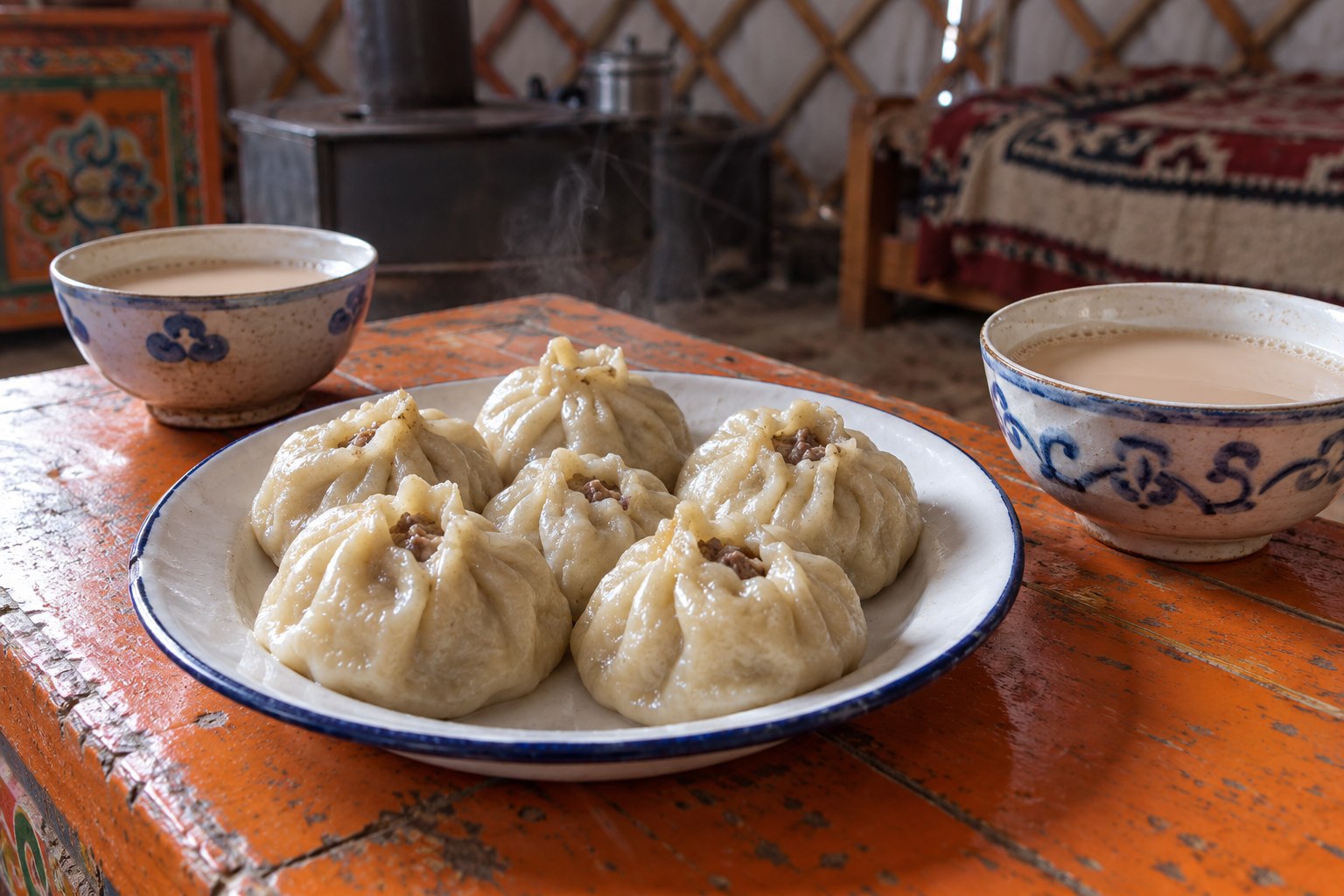
Tea or food is often offered as part of the welcome. Appreciate the gesture; if you have an allergy, follow a particular diet or do not drink alcohol, explain this kindly with your guide’s help. Share dietary requirements before the trip so that the arrangements are clear to everyone.
Ask before photographing people, including inside their home. Avoid moving household belongings to compose a picture, and leave animals undisturbed. If you would like to bring a gift, ask the local team what would be useful. A thoughtful contribution to the household is more meaningful than something chosen without knowing your hosts’ needs.
Where can you sleep in a ger in Mongolia, and when should you go?
The Orkhon Valley and the landscapes of the Khangai work well for journeys combining grazing country, walks and encounters with herders. The right stop depends on the available household and how it fits your route. Look for somewhere that allows time on the ground, with travel distances suited to the pace you want.
Further south, nights in a ger can also be part of a Gobi Desert Mongolia trip. The scenery and pastoral life differ from central Mongolia. Good planning specifies the type of welcome and facilities at each overnight stop, rather than assuming every yurt will offer the same experience.
For a first stay on the central steppe, summer, from June to August, is a season to consider. Nights can still feel cool. In May or September, prepare for colder conditions and check accommodation availability. Winter requires a different approach to routing and equipment. Read our guide to the best season to visit Mongolia and discuss your dates with the team.
What should you pack for a Mongolia yurt stay?
Bring warm evening clothes, a windproof layer, easy-to-slip-on shoes and a headlamp. A power bank helps on days away from sockets. A small wash kit and compact towel are useful when facilities are simple. Confirm the bedding arrangements before departure, including whether you will need any additional sleeping equipment.
Keep overnight essentials in a small bag so that you do not need to spread out your entire suitcase in a limited space. Earplugs may help if wind or livestock sounds wake you easily. Our Mongolia packing guide has more ideas for the rest of your trip.
Before confirming the journey, ask whether your ger is private or shared, what bedding is provided, where the toilets are and how meals are arranged. Mention any mobility difficulties too. These practical details help you choose a stay where you can relax and enjoy spending time with your hosts.
How can a nomadic family stay fit into your Mongolia itinerary?
A single night can provide a lovely first encounter, but there is limited time between arrival and departure. Where the route allows, we suggest two nights in one place. That gives you a complete day for conversations and exploring nearby without immediately packing up again.
On a longer journey, combining family stays with better-equipped camps can balance encounters and comfort. The budget depends on the whole itinerary: transfers, guiding, meals, activities and accommodation standards. Ask for a detailed quotation rather than comparing only the price of a bed.
Tell Amar Mongolia what interests you most: learning about pastoral life, walking, riding or travelling as a family. A visit needs to be prepared with the hosts and fitted around their availability. Our Mongolia tours provide starting points for building that rhythm together.
Explore landscapes and nomadic life
Wonders of Mongolia links several regions and includes encounters with herders, including time in the Orkhon Valley.
View Wonders of Mongolia →Discover another herding region
Explore the Nomadising in Khan Khentii itinerary and talk with our team about the stages and hosting arrangements.
View Nomadising in Khan Khentii →FAQ: sleeping in a yurt in Mongolia
Can you stay with a nomadic family in Mongolia?
Yes, when a family is available to welcome travellers and the visit is arranged beforehand. You may sleep in a separate guest ger or a shared space, depending on the household. Confirm the arrangements before booking.
Do Mongolian gers have showers and toilets?
A family ger does not necessarily have indoor bathroom facilities. Tourist camps may provide a shared bathroom block, while some accommodation offers private bathrooms. Ask what is actually available at each overnight stop.
Do you need a sleeping bag for a Mongolia yurt stay?
That depends on the bedding provided, the season and your route. Ask whether the blankets are sufficient and whether you need a sleeping bag. A sleeping bag liner and warm nightwear can be useful.
How many nights should you spend with a nomadic family?
One night offers an introduction. Where the itinerary allows, we suggest two nights in one place so that you have a full day for conversations and activities. This is a recommendation about pace, to be agreed with your hosts.
Ready to include a yurt stay in your Mongolia trip?
Tell us your dates, preferred pace and comfort needs. The Amar Mongolia team can help you include nights in a ger and encounters with nomadic families in a route that suits you.
The visuals in this article are AI-generated illustrations.